




What Not to Do When You Have a Migraine
If you experience migraine, you know that attacks can sometimes occur at random times and leave you feeling exhausted. It's a condition that can take you out of commission for hours or even days.
To better manage your migraine, it's important to know what not to do when you have migraine pain and related symptoms. Knowing the don'ts could help you better navigate the condition and recover more easily. Let's discuss these seven don'ts.
1. Ignoring symptoms
Don't try to "power through" a migraine attack. Ignoring the pain and other related symptoms won't necessarily make them go away - in fact, it may prolong and exacerbate them. Dismissing migraine symptoms may even make recovery more challenging.
This is where understanding the four stages of a migraine can give you more insight. For instance, each stage can present varying symptoms:
- Prodrome phase: Appetite changes, mood swings and muscle stiffness in the neck and shoulders
- Aura phase: Dizziness, muscle weakness and visual symptoms like seeing zigzag lines or flashing lights (experienced by a minority of migraine patients)
- Migraine attack phase: Nausea and vomiting, lightheadedness and sensitivity to light, smells or sounds
- Postdrome phase: Fatigue, moodiness and confusion
That is why it’s important to recognize your migraine symptoms early on. The sooner you can identify an attack beginning, the sooner you can begin treatment. Moreover, knowing how a migraine feels for you specifically is just as crucial, as people experience migraine attacks differently.
Always take migraine symptoms seriously and seek relief as soon as you can.
2. Overusing medication
At the onset of a migraine, acute treatment options are the typical go-to. Many opt for over-the-counter (OTC) pain relievers or prescription abortive medications, such as triptans. However, when migraine medication is not working, some may start overusing the drugs to find relief.
It’s vital not to go over the prescribed amount and duration. Besides risking a rebound headache through medication overuse, there are other potential dangers. For example, your body may enter a vicious cycle where it becomes more dependent on the medication, which could worsen migraine frequency and severity.
Always follow the recommended dosages and guidelines. If you experience chronic migraine, consult a healthcare professional for help developing an effective migraine treatment plan.
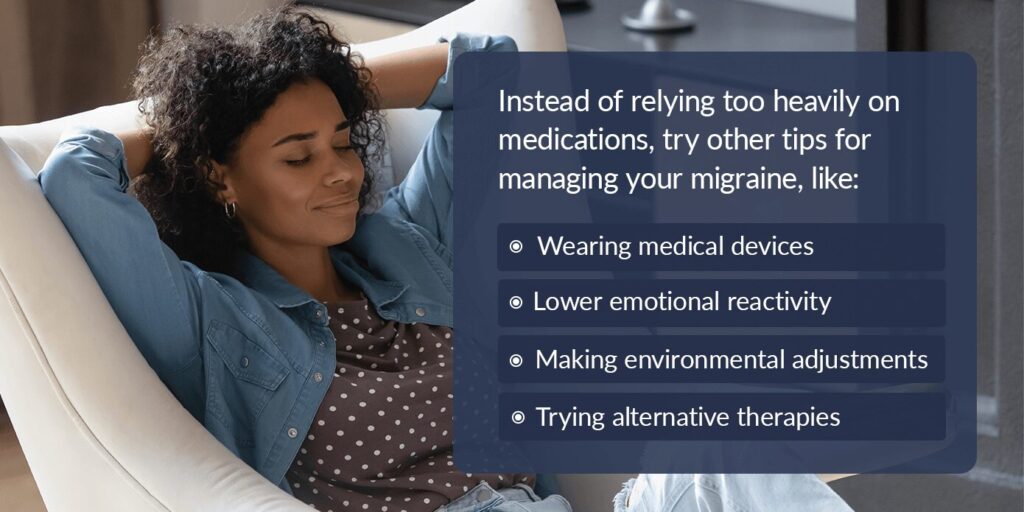
If possible, instead of relying too heavily on medications, try other tips for managing your migraine, like:
- Using medical devices for migraine
- Adopting lifestyle changes.
- Making environmental adjustments.
- Trying alternative therapies.
3. Neglecting good sleep hygiene
Migraine is exhausting. If you feel tired and weak during or after an attack, listen to your body and address these symptoms. Again, don't push through the pain. If possible, go to a dark and quiet room where you can lie down to rest or nap.
Here’s where it can get tricky. The relationship between sleep and migraine is closely knitted — they are linked psychologically and physiologically. So, sleeping too much or too little may trigger a migraine attack. Migraine and related symptoms may also disrupt your sleep.
To practice good sleep hygiene, there are various things you can do:
- Find out if sleep problems are a trigger.
- Develop a consistent sleep schedule.
- Follow a relaxing nighttime routine.
- Adjust your sleeping environment.
- Practice relaxation methods.
- Watch your caffeine intake.
4. Skipping meals and hydration
Nutrition and hydration are closely linked with migraine management.
Although migraine can affect your appetite, don’t allow it to make you skip meals. Research shows that low blood sugar can trigger or worsen migraine as hypoglycemia changes your brain’s pain receptors. Ensure you follow a consistent and nutrient-dense diet. There are specific diets that could help with migraine if you’re unsure where to start.
Additionally, it’s just as crucial to consider what you’re eating. Some foods can trigger migraine attacks, including cheeses, chocolate and cured meats. It’s a matter of knowing your specific triggers and avoiding them.
Moreover, ensure you drink enough water - whether you're experiencing an attack or not. Dehydration is a common trigger that could also exacerbate a migraine attack.




5. Engaging in strenuous physical activity
Research shows that consistent moderate physical activity can help with migraine severity and frequency. Exercise can also help with stress relief and sleep quality.
That said, the key here is not to overdo it. For some people, intense exercise can trigger migraine attacks due to metabolic changes, overexertion or dehydration.
Partaking in strenuous exercise or physical activities can worsen your migraine and related symptoms. It's recommended to avoid any activity during an attack. Rather, get into a comfortable position and rest your mind and body.
After a migraine attack, carefully continue with your daily activities and fitness regimen. Low-impact exercises to try include:
- Le yoga
- Le tai-chi
- La marche
- Stretching
6. Exposing yourself to triggers
When you feel the onset of a migraine attack, identify what triggered it and avoid or rectify the trigger immediately. Migraine is complex, so what triggers you may not be a trigger for others.
Common migraine triggers include:
- Alcohol
- Bright lights
- Caffeine
- Dehydration
- Electronic screens
- Certain foods and drinks
- Hormonal shifts
- Medications
- Nicotine
- Smells and sounds
- Too little or too much sleep
- Stress
- Weather changes
Understanding your triggers is crucial so you can effectively stay away from them and prevent future migraine attacks. This is where a migraine diary can come in handy. Whether digitally or on paper, jot down your triggers for reference. You can share these insights with family, friends and your healthcare practitioner.
7. Forgetting to take notes
Speaking of a migraine diary, you can include more comprehensive notes to better understand your migraine. After a migraine attack, remember to take notes in your diary.
Here are a few important things about the attack to jot down:
- Duration
- Intensity
- le moment de la journée,
- la zone de la douleur,
- Symptoms before and after
- Weather or environmental conditions
- Activities done or food and drink consumed prior to the attack
- Abortive treatments used
You won’t have to take note of every attack forever. A few months of data can be more than enough to help you understand how your migraine works and better manage your condition. Try using the CeCe Migraine Management app’s intuitive migraine journal function.
Try CEFALY: a dual-purpose migraine management solution
Knowing what not to do when you have a migraine can be a game-changer. One thing you should do? Use CEFALY for migraine symptom relief.
CEFALY is a clinically proven and FDA-cleared wearable device for abortive and preventive migraine treatment. As a drug-free OTC option, you can easily access this intuitive and advanced technology to alleviate your symptoms and reduce migraine frequency.
Get CEFALY Connected today and experience it for yourself.







Derniers messages

Le guide essentiel des dispositifs médicaux pour les migraines
CEFALY is an FDA-cleared medical device that targets the main pathway for migraine pain: the trigeminal nerve (the…

Best At-Home Migraine Neuromodulation Devices for 2026
Migraine affects more than 1 billion people worldwide. For people who want a drug-free option that can be…

Best FDA-Cleared Migraine Devices for Adults in 2026
Migraine affects an estimated 40 million people in the United States, and medication is not the right fit…