



What Is Chronic Migraine?
Episodic migraine attacks often occur sporadically and then leave you alone for weeks or months. If your migraine attacks are more frequent and relentless, you may have chronic migraine.
Chronic migraine means you experience a migraine headache for 15 days or more per month and this pattern lasts three months or longer. With chronic migraine, you have other migraine symptoms on at least eight of those days.
This guide will help you understand chronic migraine and what you can do about them, including.
- les symptômes,
- Causes
- Triggers
- Diagnosis
- Treatments
What makes chronic migraine different?
Chronic migraine differs from other types of migraine and headaches.
What’s chronic migraine vs. headache?
Though both migraine and headaches involve head pain, they are different conditions. The most common type of headache is the tension-type headache (TTH). Tension headaches are your typical headaches that can result from stress, improper posture, eyestrain, fatigue, hunger or other factors. They cause mild-to-moderate pain around the head and are easily treatable with over-the-counter medications. Chronic TTH can last much longer than the typical few hours or days. Still, the only usual symptoms are head, neck and shoulder pain.
Most headaches in the general population are not related to migraine. Chronic migraine, like all migraine types, is more than a headache. It's a neurological disease that often involves visual disturbances, photosensitivity and severe pain that prevents normal daily activities.
What’s chronic migraine vs. episodic migraine?
There are two main types of migraine — episodic migraine and chronic migraine. Episodic migraine is the more common type. If you have this condition, you experience migraine symptoms fewer than 15 days per month. In rare cases, episodic migraine sometimes develops into chronic migraine.
Symptoms of chronic migraine
Chronic migraine symptoms include:
- Intense headaches.
- Heightened sensitivity to light and sounds.
- Nausea or vomiting.
- Dizziness or vertigo.
- Visual disturbances.
- Difficulty speaking and understanding speech.
- Numbness or pins and needles.
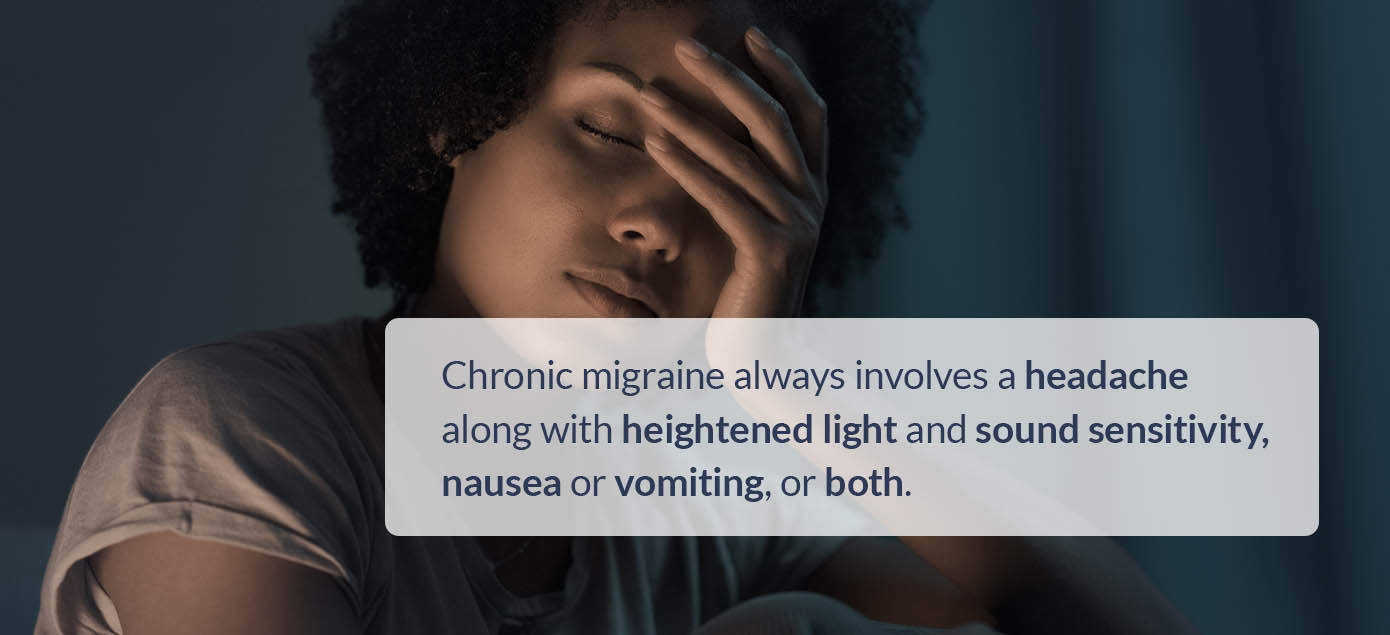
Chronic migraine always involves a headache along with heightened light and sound sensitivity, nausea or vomiting, or both.
Some people also experience aura symptoms, which are caused by the attack’s impact on different brain areas. Aura symptoms occur before the headache, and some migraine attacks skip the aura phase altogether.
The headache that accompanies a migraine attack differs from an ordinary TTH. Chronic migraine headache symptoms include at least two of these four characteristics:
- It affects one side of your head.
- It has a pulsing or pounding feeling.
- The pain is moderate or severe.
- The pain worsens with even minimal activity like walking.
A migraine attack can also have subtle symptoms - such as mood changes, neck stiffness or increased thirst - before the aura phase. This is the prodrome phase. Finally, there is often a "migraine hangover" called the postdrome phase. After an attack, you might feel confused or drained for up to a day.




Chronic migraine headache causes
Sometimes, people with episodic migraine go on to develop chronic migraine. This happens in about 2.5%-3% of episodic migraine sufferers annually. What causes chronic migraine is a scientific mystery, but we do know some of the risk factors and common triggers.
For example, these medical conditions can increase a person’s risk of migraine:
- Anxiété
- Dépression
- Fibromyalgia and other pain conditions
- Sleep apnea
- Postural orthostatic tachycardia syndrome (PoTS)
There may also be genetic, hormonal or social factors at play. Additionally, people whose parents experience migraine are more likely to experience it themselves.
Women are also more likely to experience migraine than men. Migraine attacks sometimes worsen during menstruation when estrogen levels drop and destabilize.
Chronic migraine triggers
While some attacks occur without a clear trigger, people who experience migraine often find that environmental triggers set off their attacks. You should be aware of common triggers like:
- Hunger.
- Dehydration.
- Withdrawal from caffeine or other substances.
- Sleep deprivation or disruptions.
- Excessive screen time.
- Overstimulation from light, sound or smell.
- Overuse of episodic migraine medications.
Consider keeping a "headache diary" or migraine journal. In it, write down your symptoms and any habits or environmental factors influencing them. For example, note whether you started a new medication, didn't sleep well or changed your diet. If you have a period, you can also connect migraine symptoms to your menstrual cycle.
Over time, look for patterns in your unique experience with migraine. This can help you and your doctor create an effective migraine management plan. The CeCe Migraine Management app makes it easy to track attacks, symptoms and treatments, then generates a report to reveal your unique patterns and trends.
Téléchargez l'application CeCe
Chronic migraine diagnosis
If you suspect you have chronic migraine, visit a doctor. The doctor will assess your condition using diagnostic standards, such as those set by organizations like the International Headache Society. They can diagnose chronic migraine based on the symptoms and frequency of attacks.
Treatments for chronic migraine
There is no known cure for migraine. However, 26% of chronic migraine sufferers experience remission to episodic migraine within two years. Many people with migraine find their condition improves as they age, and some stop experiencing migraine attacks altogether.
Though your condition may persist for years, several treatments can help reduce the frequency and severity of migraine attacks and allow you to resume normal life sooner.
There are several chronic migraine treatment options to explore, including:
- Lifestyle changes: Your condition may improve with healthier sleep, stress and nutrition patterns.
- Supplementation: Supplementing with vitamin B2, magnesium or coenzyme Q10 may help.
- Over-the-counter drugs: Nonprescription relief medications include acetaminophen and ibuprofen.
- Prescription drugs: Doctors may prescribe preventive drugs for chronic migraine. These include beta-blockers, tricyclic antidepressants, anti-epilepsy drugs and others. Your doctor may also prescribe prescription relief drugs, such as triptans or ergotamine.
- Neuromodulation: Devices that directly target the nerves to disrupt migraine pain signals, like CEFALY, can be highly effective in isolation or together with drugs.

Try CEFALY for migraine relief
Migraine is a disruption to your life, and finding an effective treatment plan with minimal side effects can be challenging. The right migraine treatment toolkit varies from person to person, and you could experience the relief you deserve with CEFALY.
CEFALY is a drug-free, FDA-cleared migraine treatment device. One study found that 79% of people with migraine saw a significant reduction in headache pain after one hour of CEFALY ACUTE treatment. CEFALY stimulates the trigeminal nerve to reduce migraine headache pain at its source.
CEFALY has two modes to relieve acute attacks and reduce future episodes. The treatment device is easy to use:
- Attach the electrode to your clean forehead.
- Connect the CEFALY device.
- Press a button or use the CeCe app (with CEFALY Connected) to choose PREVENT or ACUTE mode and start your treatment.
Récupérez enfin votre vie. Try CEFALY for yourself with a 90-day money-back guarantee.




Derniers messages

Le guide essentiel des dispositifs médicaux pour les migraines
CEFALY is an FDA-cleared medical device that targets the main pathway for migraine pain: the trigeminal nerve (the…

Best At-Home Migraine Neuromodulation Devices for 2026
Migraine affects more than 1 billion people worldwide. For people who want a drug-free option that can be…

Best FDA-Cleared Migraine Devices for Adults in 2026
Migraine affects an estimated 40 million people in the United States, and medication is not the right fit…