



La stigmatisation de la migraine
Des millions de personnes dans le monde souffrent de crises de migraine. For many of these people, it goes beyond intense pain, light sensitivity and nausea. La stigmatisation liée à cette maladie pousse beaucoup de personnes à considérer une migraine comme un simple mal de tête.
Ces jugements, malentendus et stéréotypes minimisent la difficulté de gérer cette affection neurologique extrêmement douloureuse. It is important that those who suffer and the people who support them make an effort to educate themselves about migraine, the impact they have on individuals and how to combat migraine stigma in our communities.
Understanding stigma
Stigma is an invisible label, a set of negative attitudes, beliefs or stereotypes that people hold about another group of people or specific characteristics they have. People often hold these beliefs because they do not understand these people are different from what they are used to or expect.
The connection between stigma and migraine can manifest as judgment or misconceptions about those who experience migraine attacks. These misconceptions can include a belief that people exaggerate their symptoms or even that migraine headaches are not a severe medical condition. Some aspects of migraine stigma include:
- Dismissal of symptoms: With a lack of knowledge that causes stigma, some folks may think they are only experiencing bad headaches and choose not to get medical attention when they are actually having a migraine attack.
- Blame and misconceptions: People who suffer from migraine attacks can be blamed for their condition. Sometimes, they also hear that they are exaggerating their symptoms or using their migraine as an excuse to avoid responsibilities, which is untrue.
History and factors contributing to the stigma of migraine
The history of migraine and their past perceptions still carry through to the present in many ways. Ancient beliefs saw migraine as a punishment for moral or spiritual failings. During the Middle Ages, people saw this affliction as witchcraft, adding fear to the stigma.
With the expansion of medical knowledge, though, there was no evidence of the supernatural affecting sufferers. The condition was seen as another disease, and the symptoms trivialized. In the 18th century, migraine attacks were seen as an excuse to avoid social responsibilities, a negative view that many still believe today. In the mid-20th century, the stigma was that migraine was psychological, an emotional disturbance or something the sufferer could actually control.
Migraine headaches are widely misunderstood as many people see them as little more than bad headaches. The reason for this may be due to:
- A lack of knowledge: Most folks have very little knowledge about migraine, so they do not understand the pain and other symptoms sufferers deal with during migraine attacks.
- Invisible symptoms: Migraine headaches do not have visible signs, like hives or a cast on a broken leg, which leads many people to dismiss or doubt the severity of this condition.
- Media portrayals: Movies and television shows often inaccurately portray having a migraine as a minor inconvenience. These portrayals create a negative social stigma of migraine and reinforce the wrong ideas about this medical condition.




Effects of migraine headache stigma on sufferers
People who have chronic migraine have symptoms for at least 15 days in a month. During this time, they will often struggle with a lot of physical symptoms like pain, stress, depression and insomnia. These can be a heavy burden to carry, and when you add stigma to this basket, it can start to impact their work or family life.
Stigma can impact those who suffer from migraine attacks in the following ways:
- Isolation: Lack of understanding often leaves people with migraine attacks feeling isolated. As a result, they may decide against seeing a doctor when they need medical attention.
- Impact on mental health: Dealing with stigma adds stress, which affects mental well-being, potentially aggravating their mental health struggles and physical symptoms.
- Lack of support: These stereotypes can make it difficult for people with migraine to get the support or help they need from work, family or friends.
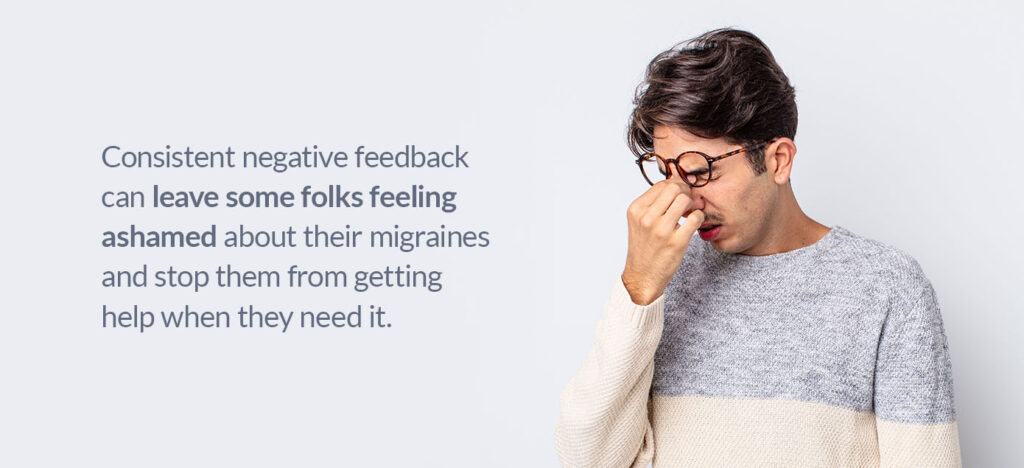
- Feelings of shame: Consistent negative feedback can leave some folks feeling ashamed about their migraine pain and stop them from getting help when they need it.
- Internal stigma: Too much exposure to a negative stigma about migraine headaches can cause people to minimize their symptoms, either to protect themselves from scrutiny or because they start to believe the public perception.
- Fewer opportunities: Some people who have frequent migraine attacks face discrimination or can get limited opportunities at work. This problem can extend to their social lives as folks start to avoid them or stop extending invitations.
Overcoming chronic migraine stigma
Addressing stigmas in society can help foster empathy and support in our communities. The best way to help lessen stigma is by teaching people more about the things they do not understand well in these ways:
- Creating awareness: By teaching people about migraine and other related conditions, we can help the public see that migraine attacks are a serious problem for many people and teach them how to support someone with migraine during an attack.
Advocacy efforts: More awareness about migraine attacks may encourage others to speak up for those with migraine and oppose unfair actions or judgments.
Support groups and communities: Creating support groups allows those who experience migraine attacks to share their experiences. Being around others who understand this medical condition can build confidence and reduce feelings of isolation. - Open discussions: It is important to encourage people to share their migraine-related experiences to help others recognize their challenges and build empathy.
Learn How CEFALY Prevents & Relieves Migraine Pain
The Stigma Scale for Chronic Migraine
The Stigma Scale for Chronic Migraine (SSCI) is an objective measurement tool for the systematic study of stigma in migraine. It has 24 questions, 13 of which focus on internalized stigma and 11 on enacted stigma, with scores running between 24 and 120. The general score for those who suffer from migraine attacks is between 41 and 54. Epilepsy patients, for comparison, score around 44.
Treat your migraine attacks with CEFALY Technology
Migraine stigma makes life even more challenging for anyone dealing with migraine attacks. By creating more awareness about this medical condition through advocacy efforts and support groups, we can create more compassion and understanding for those with migraine.
CEFALY is a risk-free and FDA-cleared device that lets you treat your migraine at home. It attaches to your forehead to stimulate the main path for migraine pain — the trigeminal nerve. Long-term use of this device means that you can look forward to a decrease in migraine attacks and pain intensity. Try CEFALY risk-free and start your journey toward migraine relief today.




Derniers messages

Le guide essentiel des dispositifs médicaux pour les migraines
CEFALY is an FDA-cleared medical device that targets the main pathway for migraine pain: the trigeminal nerve (the…

Best At-Home Migraine Neuromodulation Devices for 2026
Migraine affects more than 1 billion people worldwide. For people who want a drug-free option that can be…

Best FDA-Cleared Migraine Devices for Adults in 2026
Migraine affects an estimated 40 million people in the United States, and medication is not the right fit…