Home>How to Prevent a Migraine Attack in The Summer
1 décembre 2023
Comment prévenir une crise de migraine en été
Quand le soleil se lève, la seule chose à laquelle vous pensez devrait être les journées à la piscine et les sorties à la plage, pas la douleur migraineuse. Yet, 12% of adults experience migraine, and for many, the warm weather only worsens their symptoms. If your migraine symptoms become more severe or frequent in the summer, you may feel you need to avoid outdoor activities when the temperature rises. Fortunately, migraine doesn’t have to keep you indoors. You can help prevent summer migraine attacks by prioritizing wearing sunglasses, staying hydrated and avoiding overexertion during peak sun hours.
Once you know why your migraine symptoms get worse when the weather gets hot, you can begin to manage them. But don't worry - you don't have to figure it out on your own. Here's a guide to help you understand how migraine is affected by summer weather, with tips for preventing and managing the symptoms.
3 reasons your migraine gets worse in the summer
While it may seem like you get more random migraine attacks in the summer, they may not be as random as you think. The rising temperature and longer days spark a series of changes that may cause your summer migraine. Here are just a few possible triggers:
1. The weather changes
In summer, many regions of the world experience hot, sticky weather as days get hotter. Temperature changes can affect an individual's body in many ways. If overlooked, these changes can trigger a migraine attack.
Hotter temperatures and increased humidity cause people to sweat more. The more a person sweats, the greater their risk of becoming dehydrated - and dehydration may trigger migraine. Other weather changes that can induce a migraine attack include:
Bright sunlight
Sun glare
Dry or humid air
Storms and intense wind
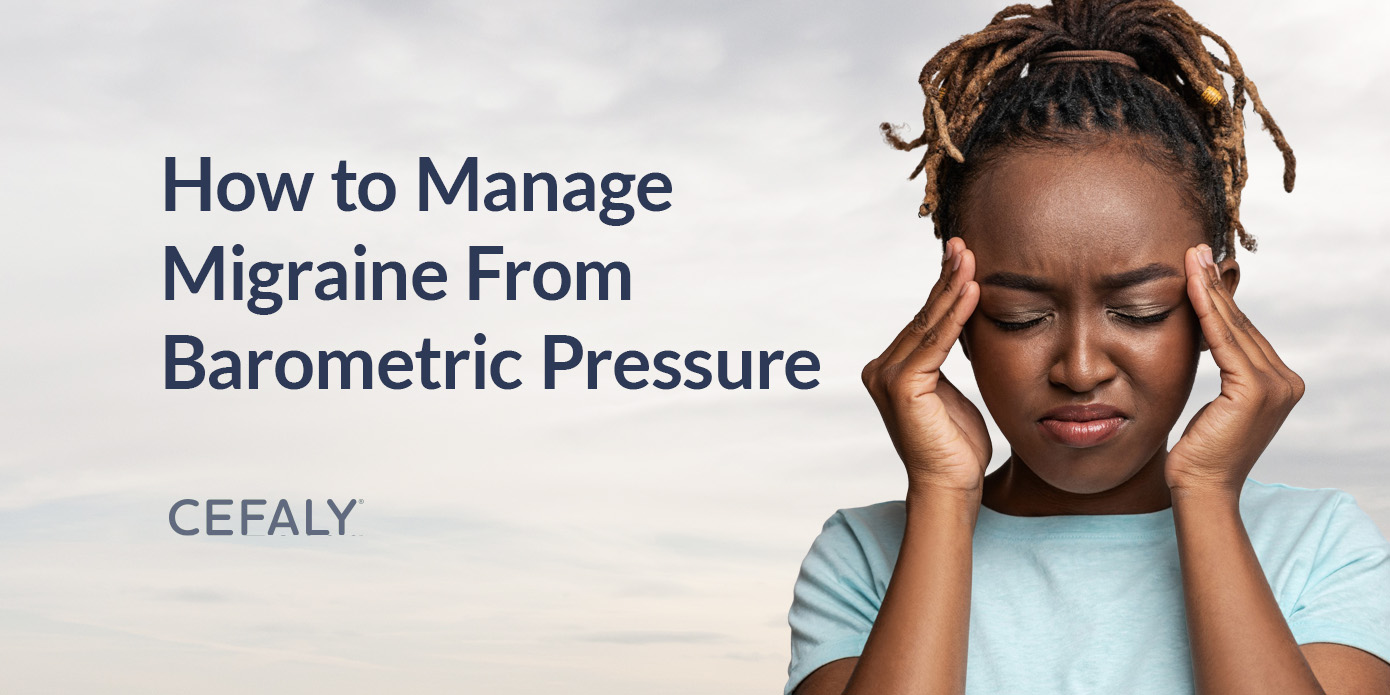
Shifting barometric pressures can also trigger a summer migraine attack. While a person’s sinuses are usually at equilibrium with the barometric pressure, this equilibrium is disturbed when the pressure changes in the summer, and some people may experience a migraine attack.
A 2015 study found that the shift in barometric pressure associated with an incoming storm caused 75% of people in the study to experience a migraine attack. Though there is little you can do to avoid this trigger, you can keep an eye on the weather and atmospheric changes to know what to expect and create a plan to manage symptoms.
2. Your daily habits change
Many people unknowingly change their habits in the summer. The increased amounts of sunlight and longer days cause many to get less sleep than in previous seasons. These changes result in a migraine attack for some.
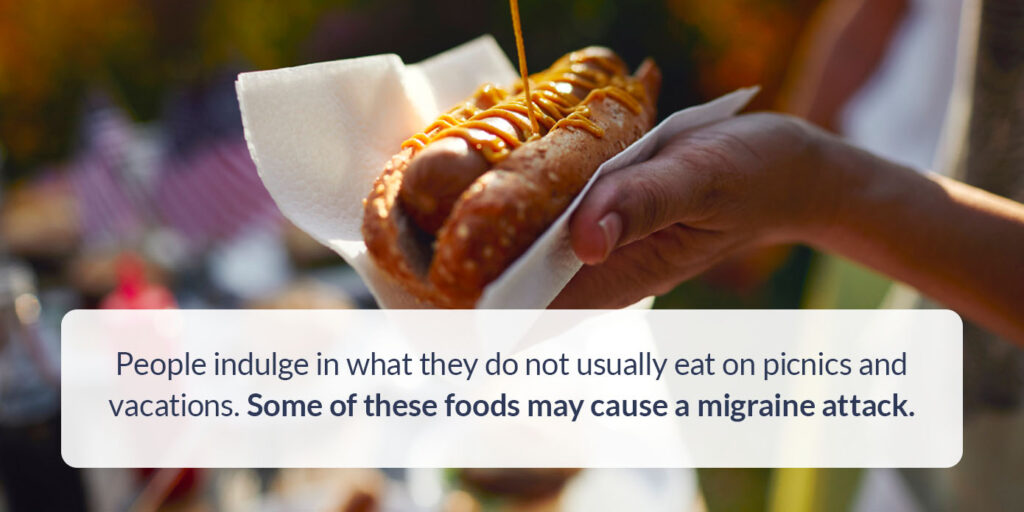
In addition to changing your sleep routine, you may also eat differently or indulge in what you do not usually eat at picnics or on vacation. Some of these foods may cause a migraine attack.
Drinks with high amounts of sugar, caffeine or aspartame
Pickled items
Citrus fruits
Pineapple
Alcohol — especially beer, wine and dark liquor
Pre-made sauce with high amounts of sugar
If you want to know if a particular food triggers your migraine symptoms, try an elimination diet - but know that sometimes it isn't the food alone that sparks a migraine attack. When combined with other factors, like heat and physical activity, food may be enough to send you over your personal threshold.
Don't be discouraged by the length of the list. There are plenty of other foods and alternatives you can choose to minimize your chances of developing a migraine attack. A few options include:
Fresh cheeseburgers made with ground beef
Pulled pork with homemade barbecue sauce
Fresh mocktails with summer fruits
Cool, sparkling water
3. Your plans change
It is hard to account for everything that will happen in the summer. While you might be a master planner in the other seasons, summer can disrupt your carefully curated schedule. While spontaneous plans may lead to the best adventure you have ever had, they could also lead to a migraine attack.
If a last-minute getaway causes feelings of stress, it could trigger your symptoms. When choosing a trip or event, consider how it will affect your stress levels. Unplanned trips could also cause you to turn to migraine-inducing foods or activities. Consider ways you can balance spontaneity and planning, like prioritizing staying cool and hydrated while exploring.
Get Drug-Free Migraine Relief With CEFALY
La garantie satisfait ou remboursé de 90 jours
Admis par la Food and Drug Administration (« FDA-Cleared »)
Financing available
Tips on how to enjoy Summer with fewer migraine episodes
Now that you have a greater understanding of why your symptoms worsen in the summer, let’s go over some tips and tricks for minimizing the chance of developing a summer migraine:
1. Keep sleep patterns steady
L'été, vous vous levez peut-être plus tôt que d'habitude, ou vous vous couchez plus tard, ou alors vous faites des siestes. Tout cela est agréable, mais l'irrégularité au niveau du sommeil peut déclencher une crise migraineuse. Essayez de vous coucher et vous lever tous les jours à la même heure. Si vous dormez mal, réduisez la lumière artificielle le soir et gardez votre chambre au frais et dans la pénombre.
2. Stay hydrated
Il existe un lien clairement établi entre la déshydratation et les crises migraineuses, et le fait de boire plus d'eau peut permettre de réduire la fréquence des crises. Dans le cadre d'une étude, on a demandé à un groupe de personnes souffrant de migraines de boire six verres d'eau supplémentaires par jour. While they averaged only four extra cups, those participants reported 21 fewer hours of pain in a two-week period, compared to the control group.
3. Beat the heat
A study published in Neurology found a definite connection between summer heat and migraines: a 9-degree (Fahrenheit) increase in temperature correlated with a 7.5 percent increase in the likelihood of a serious migraine attack. Évitez les heures les plus chaudes de la journée, cherchez des endroits frais et buvez beaucoup d'eau. Rather than planning a long run or game of tennis in the middle of the day, try to plan these activities near sunrise or sunset to limit the stress put on your body. Before you agree to do any physical activity outdoors, check a weather app and a digital barometer.
4. Monitor your stress levels
Vous connaissez les « migraines de descente »? Ces migraines surviennent suite à une période de stress ou d'anxiété. Lorsque le niveau de stress redescend, une crise migraineuse survient. Le seul point positif concernant les migraines de descente est qu'elles sont prévisibles, ce qui signifie que vous pouvez agir. Pour éviter les migraines liées au stress, vous pouvez songer à prendre des congés, vous faire aider pour vos enfants ou pratiquer des techniques de réduction du stress. Si vous envisagez de partir en vacances, évitez de partir juste après la fin d'un projet; si vous n'avez pas d'autre solution, intégrez quelques jours d'acclimation à vos vacances pour laisser votre esprit et votre cerveau décompresser.
5. Maintain your migraine prevention practice
L'été, beaucoup de choses changent. Mais souvenez-vous que la migraine aussi adore le changement! Privilégiez la routine. Suivez une hygiène de vie anti-céphalées chaque semaine : exercice modéré, repas à heures régulières, et levers et couchers réguliers également.
Get Drug-Free Migraine Relief With CEFALY
La garantie satisfait ou remboursé de 90 jours
Admis par la Food and Drug Administration (« FDA-Cleared »)
Financing available
6. Understand your specific weather triggers.
Common weather-related migraine triggers are temperature, humidity, bright or flickering light, winds and specific weather conditions, such as an unusual warm front, said Jan Hoffman, MD, PhD, a migraine researcher who spoke about this topic at the 2021 Migraine World Summit. Barometric pressure can also be a trigger — not low or high pressure, necessarily, but a sudden shift from one to the other.[i]
Cependant, a déclaré le Dr Hoffman, de nombreuses personnes qui pensent que la météo est un déclencheur de la migraine peuvent en fait être déclenchées par autre chose. Il théorise que les personnes qui sont déjà dans la phase prémonitoire d'une crise de migraine peuvent être plus sensibles aux changements de température, de lumière ou de pression barométrique, de sorte qu'elles les remarquent plus vivement.
Comment pouvez-vous déterminer vos déclencheurs spécifiques de migraine? The best way is to keep a headache diary, whether on paper or in an app. When you track your migraine attacks and symptoms, as well as factors like diet, sleep and weather, you can spot recurring patterns that may trigger your summer migraine.
7. Go low-impact.
Lorsque vous faites de l'exercice avec une migraine, les experts recommandent généralement de choisir des activités qui sont faciles pour votre corps, sans heurter ni battre. Les bons choix incluent :
La natation
La marche
Le cyclisme
Le yoga
Le tai-chi
Mais vous devriez suivre votre passion! Si vous aimez courir, courez. Restez simplement hydraté et faites attention à votre corps. Si vous aimez l'escalade, escaladez. Pour éviter les tensions au cou pouvant causer des migraines, certains grimpeurs recommandent de porter des lunettes d'assurage réfractaires à la lumière lors de l'assurage.
8. Like a scout, be prepared for a migraine in the Summer.
If you’re venturing out for the day or the weekend, bring key elements from your migraine tool kit:
Water: You already know that dehydration can trigger migraine attacks, and it's easy to underestimate the amount of water you'll need in the summer. Une randonnée intense par temps chaud peut vous obliger à boire 1 litre d'eau - ou plus - par heure, selon les pros du plein air de REI. They also recommend pre-hydrating before you exercise and bringing sports drinks or powders to restore your electrolyte balance.[ii]
Snacks: Skipping meals can also be a migraine trigger. Les goûters adaptés aux migraines peuvent inclure des fruits frais (les pommes, les poires et les raisins voyagent bien), des carottes, du céleri, des graines de tournesol, des bretzels, des croustilles.
Sunglasses and a hat: If you're sensitive to bright light, these are a must-have. Les meilleures lunettes de soleil pour la migraine sont polarisées, qui réduisent l'éblouissement dû à la lumière du soleil réfléchie, ou ont une teinte FL41.
Cooling gear: To avoid overheating, wear breathable, lightweight clothing. Un tour de cou rafraîchissant ou un chapeau respirable peut offrir un doux soulagement les jours de feu.
Acute migraine treatment: Bring your CEFALY, your migraine medication, and any other treatments you rely on.
À lui seul, le temps chaud et humide pourrait ne pas déclencher une crise migraineuse. But if you’re already stressed or sleep-deprived, you could be at risk.
« Il y a de plus en plus de preuves montrant qu'au cours d'un mois donné, le seuil pour déclencher une crise de migraine varie considérablement », a déclaré le Dr Hoffman. « Il y a donc des jours où vous êtes très susceptible d'avoir une crise migraineuse, et d'autres jours où vous ne l'êtes pas. Probably, for example, a change in weather may be the last thing you need to trigger an attack, whereas on another day, you just wouldn't care."
CEFALY can help raise your migraine threshold by gradually desensitizing the trigeminal nerve. CEFALY envoie de minuscules impulsions électriques via une électrode autoadhésive placée sur le front afin de stimuler le nerf trijumeau et ainsi de réduire la fréquence et l'intensité des crises migraineuses,
Use the 20-minute PREVENT program each day! Daily use is clinically proven to help prevent migraine attacks: In one study, CEFALY users saw an average 30% drop in migraine days after three months of treatment.
CEFALY is an over-the-counter medical device users wear to minimize migraine pain. The device has been cleared by the FDA and is clinically proven as a safe, non-invasive way to help relieve or reduce pain from migraine in individuals 18 and older.
CEFALY offers users a drug-free way to gain migraine relief. The device uses external trigeminal nerve stimulation (eTNS) to stimulate and desensitize the trigeminal nerve, which acts as the main path for migraine pain.
Created by people who know the physical and emotional pain a migraine causes, CEFALY’s purpose is to help people relieve their migraine symptoms and enjoy more migraine-free days.
To find out more information or buy our product, visit our site today. Because we want you to love CEFALY, you can try the product for 90 days, and if you are not satisfied, send it back for a full refund.