




How to Create a Migraine Action Plan
Whether you've just experienced your first attack or have lived with the disease for a long time, you know how disruptive migraine can be. A thorough migraine action plan gives you the tools you need to respond to symptoms quickly, even when you're away from home.
What is a migraine action plan?
A formal migraine action plan (MAP) is a written care plan and rescue strategy developed by your physician. It may be a single document or several documents you keep together in a packet. This type of MAP has four parts:
- Headache information: An overview of your official diagnosis and treatments
- Home rescue plan: A list of recommended care strategies and warning signs for at-home attacks
- Hospital rescue plan: Guidelines for when to seek care and guidance for emergency personnel
- Medications to avoid: A list of medications known to worsen migraine symptoms
A formal MAP is just one part of creating an action plan for migraine attacks. There are also several steps you can take to help manage your condition when you're at home or on the go:
1. Prepare the essentials
As you work with your doctor to create a written MAP, have the following information ready for easy reference:
- Migraine type: Knowing your migraine type is critical to developing a management plan that works for you. It also lets emergency room personnel know how to treat your symptoms if necessary. If you haven’t been diagnosed with a specific type of migraine yet, your doctor will ask questions about your history with the disease, including symptoms and frequency.
- Typical symptoms: Make a list of symptoms you typically experience with migraine attacks and what stage they occur in. Include all known manifestations, such as aura, audible or visual hallucinations, nausea, dizziness and headache location. Specify the severity of pain, weakness, confusion, sensitivity to light and noise, or fatigue.
- Common triggers: Note anything that has triggered your migraine in the past. Common examples include strong smells, bright or flashing lights, stress, hormonal fluctuations, specific foods and drinks, and certain weather conditions.
- Treatment history: Make sure your MAP has a record of your migraine treatment history, including previous and current medications, neurological scans, and holistic treatments like acupuncture. The completed document should list which treatments have not worked or have worsened your symptoms in the past.
- Medication list: Your MAP should list all prescription and over-the-counter medications you currently take and their corresponding dosages. Be sure to disclose all medications, even if you only take them as needed.
- Known allergies: Let your provider know about any food or medication allergies you have, no matter how mild.
Your doctor will assess your whole health profile and note their recommendations on your MAP for other physicians or specialists to review as needed. They'll help you understand the distinctions between mild, moderate and severe attacks and how to know it's time to go to the hospital. Keep your MAP with you wherever you go, preferably in your wallet with your ID card, so it's easily accessible. Be sure to present it to the nurse or doctor if you ever need emergency care.




2. Build location-specific toolkits and rescue plans
Building a personalized migraine toolkit is one of the best ways to manage your symptoms and be prepared when attacks strike. Have one for home, work or school, and for on-the-go management during travel or special events. Tailor the contents to your specific type of migraine — for example, if migraine attacks make it difficult or impossible to communicate your needs, have a plan for letting others know what’s going on and how they can help.
Accueil
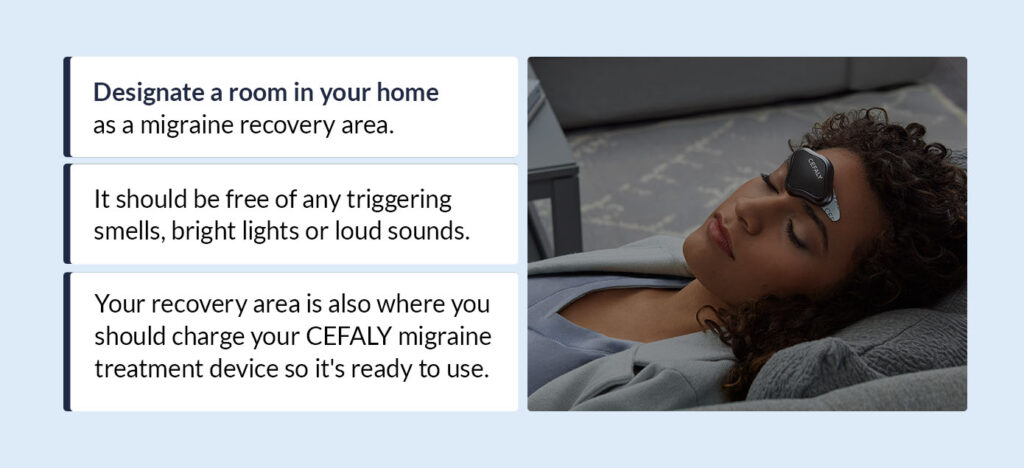
Designate a room in your home as a migraine recovery area. It should be free of any triggering smells, bright lights or loud sounds. If you live near a busy street, have a comfortable place to lie down that isn’t near a window. Equip the space with plenty of bottled water and nourishing snacks so you don’t have to walk to the kitchen when your symptoms worsen. Your recovery area is also where you should charge your CEFALY migraine treatment device so it’s ready to use.
Note early symptoms in your migraine diary or the CeCe Migraine Management app. Now is the time to let your emergency contacts know what’s happening so they can be on standby if needed. If possible, have a backup plan for child or pet care so you can focus on recovery without disruption.
Once everything is in place and you have taken any necessary medication, turn on your CEFALY device's ACUTE mode. ACUTE is a 60-minute treatment that relieves migraine pain when used at the first sign of an attack.
Work or school
Living with migraine often means juggling symptoms with other responsibilities. Creating a migraine action plan for school or work can help. Start by familiarizing yourself with your job’s or school’s absence and sick leave policies. Don’t hesitate to request accommodations that can help you manage or avoid symptoms.
Pack a small bag or carrying case with the following items:
- Prescription or over-the-counter medication
- Charged CEFALY device
- Room-darkening eye mask
- Battery-operated fan
- Insulated water bottle
- Sound-blocking earplugs or headphones
- Blue light glasses
- Sunglasses
- Heating pad
- Acupressure device
- Formal MAP document
- Emergency contact list
Consider talking with management or your peers about lightening or adjusting your workload when symptoms begin. If you frequently develop migraine at work, or homework and studying seem to trigger attacks, consider what changes you can make to prevent future issues.
Traveling
Try to avoid traveling alone if you're prone to debilitating migraine attacks. Having someone who understands your symptoms and how to respond will give you more peace of mind.
As you plan your trip, skip the hostels or other shared spaces that would make migraine recovery difficult. Stress is a big trigger for many, so finalize your travel details as soon in advance as possible for a smoother experience. If you’re flying, consider an overnight ticket to avoid the bright lights and loud noises of daytime flights.
Your travel toolkit should include the same items as those in your work or school kit, as well as:
- Addresses of the nearest hospital, urgent care and pharmacy to where you’ll be staying.
- A signed letter from your doctor or pharmacist if traveling with medication.
- A copy of your health insurance information.
- A portable charger for your phone so you always have a way to contact help.
- Translated versions of your MAP and emergency contact list if traveling internationally.
- Contact information for local taxis in case you need help getting back to your hotel.
Practice migraine prevention strategies in the days and weeks leading up to your departure. CEFALY’s PREVENT mode is a great option — in one study, more than 38% of people who used one 20-minute session of PREVENT daily saw at least a 50% reduction in migraine days.
3. Communicate with your emergency team
If you're experiencing a new migraine symptom or a known symptom is more severe than usual, consider going to the hospital or the nearest urgent care. Your MAP should list atypical manifestations to watch for, but always trust your instincts if something doesn't feel right. In these instances, it's essential to communicate with your emergency team. This includes the nurses and doctors at the hospital, as well as personal contacts who can lend a hand during a migraine attack.
Present your MAP during your intake evaluation and let them know about any new or worsening effects. If symptoms leave you unable to talk or think clearly, bring a friend with you who knows your medical history and can answer questions for you.
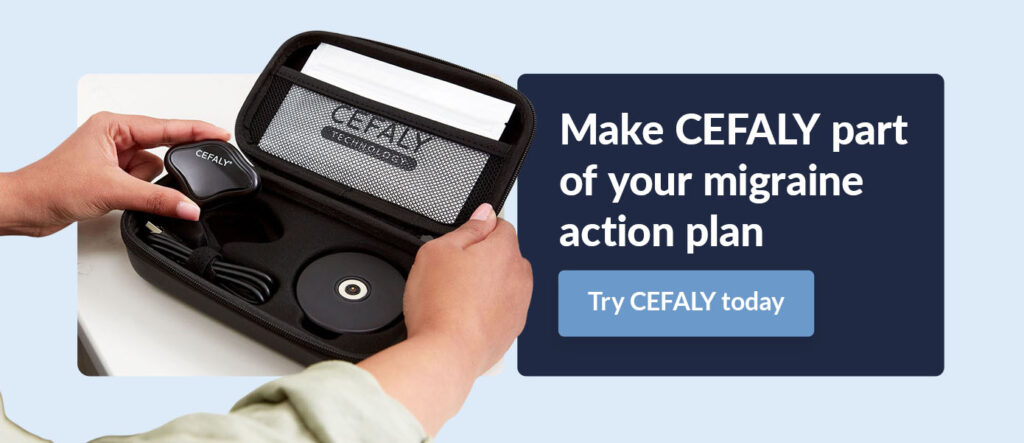
Make CEFALY part of your migraine action plan
Life with migraine comes with a unique set of challenges, but the right action plan arms you with the tools you need to face each one. Trust CEFALY as your partner in migraine management. Equipped with two modes, CEFALY is an FDA-cleared, drug-free treatment and prevention device that can help you take back control of your life. Explore how it works or order your device today.




Derniers messages

Le guide essentiel des dispositifs médicaux pour les migraines
CEFALY is an FDA-cleared medical device that targets the main pathway for migraine pain: the trigeminal nerve (the…

Best At-Home Migraine Neuromodulation Devices for 2026
Migraine affects more than 1 billion people worldwide. For people who want a drug-free option that can be…

Best FDA-Cleared Migraine Devices for Adults in 2026
Migraine affects an estimated 40 million people in the United States, and medication is not the right fit…