




Autonomiser les patients souffrant de migraine chronique
Gérer la migraine chronique peut être difficile pour les patients. En tant que professionnel de santé, vous avez le pouvoir de faire une réelle différence. Vous pouvez donner aux patients les outils et les connaissances nécessaires pour qu’ils se sentent plus maîtres de leur état. C’est pourquoi une relation solide entre le professionnel et le patient est cruciale.
It allows you to work together on care and ways to manage the migraine disorder. This means talking about their triggers and finding treatments that work. With support and education, migraine patients can feel like they're in control of their migraine treatment journey. Now, let's find out how empowering them may help improve their quality of life.
How to empower patients with migraine
Let’s break down a few key strategies to use.
Provide knowledge
Educating patients about migraine headaches is the first step of their journey. As a healthcare professional, you can help build that foundation. Help them understand the essentials, such as what migraine is and why it happens. You can also talk about the different treatments available.
Talk about the four stages of migraine - prodrome, aura, attack, and post-drome. Par exemple :
- What happens before a migraine starts
- What patients might feel during an attack
- What they may experience afterward
Present the details in an easily digestible way. Discuss the roles different migraine triggers play, such as food and stress. Explain that lifestyle factors also play a part in managing chronic migraine.
Advise your patients to keep learning about migraine over time. Share reliable resources or suggest support groups for the long run. The more they know, the more confident they'll feel about managing their migraine.
Encourage participation
The next step is to encourage migraine sufferers to take an active role in their treatment plan. Involvement from both sides is essential if they want to make progress. So, instead of just prescribing treatments, involve them in decision-making.
Ask questions like, "What's been working for you?" or "Are you comfortable with this plan?" Collaborate on a treatment strategy. Theirs may include medication, lifestyle adjustments and complementary therapies.
Participation and patient education for migraine go hand in hand. Show your patients how to track their symptoms and spot patterns. Keeping a migraine diary can help them feel more empowered. The more they take part in their care, the more ownership they'll feel over their health.
Keep the door open
Build a strong relationship with your migraine patient through regular, open communication. Make sure they feel heard and understood, not rushed or dismissed. Chronic migraine can take a toll on mental health, and offering empathy can help.
Create a comfortable space where patients feel comfortable talking to you about their migraine. And it doesn't stop there - schedule regular follow-ups. These appointments help you to reassess a patient's progress or adjust the treatment.
Take action
Encourage them to make small, manageable changes. For example, suggest practicing stress reduction techniques or improving their sleep habits. Small steps can make a big difference in migraine frequency and severity.
Suggest resources, apps or wellness tools that can support them daily. When patients have clear steps to follow, they're more likely to stick with their plan. Guide them on setting realistic goals - and remember to celebrate their wins.
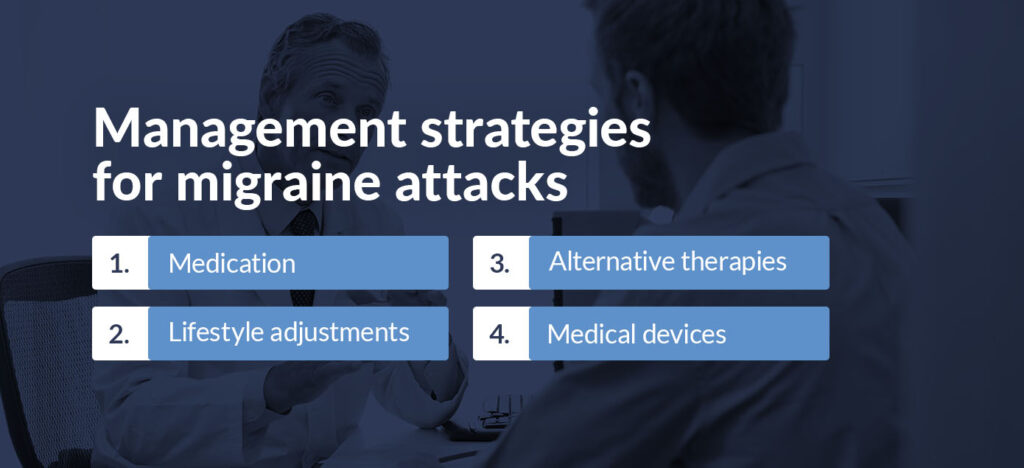
Management strategies for migraine attacks
It's important for patients to understand that there's no one-size-fits-all solution for migraine. Often, effective treatment requires a multi-pronged approach.
1. Medication
For many, medications are the first line of defense. There are various types of medications that can treat and prevent migraine including:
- Over-the-counter (OTC) pain relievers
- Prescription non-steroidal anti-inflammatory drugs (NSAIDs)
- Triptans
- Les bêta-bloquants
- Les inhibiteurs de canaux calciques
- Antidepressants
- Anti-seizure medications
- Certain nausea drugs
2. Lifestyle adjustments
Use the acronym "SEEDS" to explain how patients can approach their lifestyle adjustments. It stands for:
- Sleep: Sleep deprivation or disruptions are common chronic migraine triggers for many. Encourage patients to follow a night routine to prevent migraine attacks. Also encourage them to get an adequate night’s sleep each day.
- Exercise: Exercise’s benefits waterfall into migraine prevention — stress relief and quality sleep. Some patients may state that exercise is a migraine trigger. Luckily, there are ways to prevent an exercise migraine while getting in your workout.
- Eat: Food and drink can be tricky. Some foods can trigger migraine attacks and can be specific to the patient. Encourage patients to follow a healthy diet and stay hydrated. Although certain diets may help, a specialist can give better advice.
- Diary: A great way for patients to understand their migraine is to keep a migraine diary. Use it to improve communication effectiveness in managing the patient’s condition.
- Stress: Stress is another common migraine trigger. Managing stress-induced migraine may involve relaxation techniques or mindfulness.
3. Alternative therapies
Migraine sufferers can also try other ways to manage their condition, like:
- Acupuncture: There is evidence that acupuncture may help migraine patients. Some individuals have fewer flare-ups when attending regular appointments.
- Osteopathy: Osteopathy uses gentle manipulation to relieve tension and improve blood flow. This may reduce migraine frequency and severity.
- Reflexology: Reflexology involves applying pressure to specific points on the feet. This practice aims to balance energy flow and promote relaxation. Its benefits may ease migraine symptoms.
4. Medical devices
Neuromodulation therapy has been clinically proven to relieve migraine symptoms and reduce attack frequency. Most neuromodulation devices for migraine require a prescription, but CEFALY does not.
CEFALY uses mild neurostimulation to target the trigeminal nerve. This nerve is the main conductor of migraine pain.
The device has two modes:
- ACUTE: For relief when a migraine starts
- PREVENT: To help reduce how often migraine happens
It’s a noninvasive, easy-to-use solution that helps patients live life with fewer migraine days and less migraine pain.
View Additional Resources About CEFALY for Healthcare Professionals
Empower your migraine patients with CEFALY
Empowering patients with chronic migraine means giving them easy, practical options. That’s why CEFALY is a great choice. It’s a drug-free, easy-to-use device that can make a difference in managing migraine attacks.
Help your patients manage their migraine! Talk to them about CEFALY.


Derniers messages

Le guide essentiel des dispositifs médicaux pour les migraines
CEFALY is an FDA-cleared medical device that targets the main pathway for migraine pain: the trigeminal nerve (the…

Best At-Home Migraine Neuromodulation Devices for 2026
Migraine affects more than 1 billion people worldwide. For people who want a drug-free option that can be…

Best FDA-Cleared Migraine Devices for Adults in 2026
Migraine affects an estimated 40 million people in the United States, and medication is not the right fit…