




Kinésithérapie pour la migraine
La migraine est un trouble neurologique complexe. Comment la kinésithérapie – qui se concentre sur le système musculosquelettique – peut-elle aider à le gérer? Les recherches suggèrent qu’il existe une relation entre les deux. Bien que la plupart des gens se tournent vers les médicaments, la kinésithérapie offre potentiellement une solution naturelle qui peut aider à cibler la cause profonde de la douleur migraineuse.
- Role of physical therapy in migraine management
- Benefits of physical therapy for migraine
- Risks of physical therapy for migraine
- Physical therapy techniques
The role of physical therapy in migraine management
A migraine impacts your central nervous system (CNS), which consists of two major organs - the brain and spinal cord. However, migraine also affects the peripheral nervous system (PNS), which involves everything else outside the CNS's organs. The PNS is also responsible for sending messages to and from the brain. So, during an attack, people with migraine may experience pain and neurological symptoms like muscle weakness and sensory disturbances.
It’s all linked to the trigeminal nerve — the largest cranial nerve and the primary site where migraine attacks are activated and felt. This nerve is connected to various sensors in our facial skin, muscles, tendons and teeth. Some of these sensors could be the link between physical therapy and migraine.
Physical therapy, or physiotherapy, involves exercises, massages and stretches of the musculoskeletal system. Its main goal is to alleviate pain through various physical stimuli. A physiotherapist can use different physical therapy techniques to target trigeminal nerve-related issues.
For instance, a recent case study on an individual with migraine who opted for physical therapy found that her pain levels decreased substantially. This case study used techniques like manual therapy for nerve mobilization to limb strengthening and stretching.
A systematic review of seven randomized controlled trials showed that physical therapy had promising results in improving migraine symptoms and quality of life. The studies used techniques like aerobic exercises, acupressure, hydrotherapy and connective tissue massages for people with chronic migraine (CM).
Benefits of physical therapy for migraine
Physical therapy can be ideal for those seeking a natural, noninvasive approach as it targets certain root causes, like tense muscles, restricted mobility and poor posture. Here's what you may experience during physiotherapy sessions.
1. Reduced muscle tension and pain
If your migraine stems from tight muscles, physical therapy modalities like manual therapy and massaging may help release tension.
2. Improved posture and spinal alignment
Poor posture can strain your cervical spine, which could trigger migraine. Doing postural correction exercises, for example, may improve your alignment and reduce stress on your head and neck.
3. Increased blood circulation
Restricted blood flow may contribute to migraine onset. Many physical therapy techniques require some kind of movement, whether it's the participant physically stretching or therapists giving them a massage. Regardless of the modality, it aids in blood circulation. With improved blood flow, your brain receives more oxygen and nutrients.
4. Decreased stress levels
Stress is a major migraine trigger. However, receiving a massage, doing light exercises, or practicing relaxation techniques helps calm the nervous system. This can mean less stress and potentially fewer migraine attacks.

Risks of physical therapy for migraine
Although physical therapy can benefit some people with migraine, it does come with potential risks. For instance, some may experience migraine after physical therapy, known as an exercise-induced migraine. The exact cause isn’t clear, but a few factors could trigger an attack:
- Metabolic changes
- Routine changes
- Overexertion
- Dehydration
You could stick to lower-impact exercises and warming up beforehand, but always consult with your physical therapist or doctor first.
Physical therapy techniques for migraine relief
There are two main types of physical therapy - active and passive. Active physical therapy is when the participant does the exercises, whereas passive physical therapy is when someone else, the physiotherapist, performs certain actions on the individual. One isn't necessarily better than the other. Both types can help with migraine management and have other positive health outcomes.
Regarding specific modalities, a healthcare professional may recommend the following physical therapy exercises for migraine.
Manual therapy
Manual therapy involves different hands-on techniques that target tight muscles. One technique includes myofascial release. This is where a physical therapist gently massages tight fascia, the connective tissue that holds everything in place, that can restrict your movement and potentially cause pain. The result is loosened muscles and improved blood flow, which can help with migraine pain intensity.
Trigger point therapy
In trigger point therapy, physiotherapists will target specific pressure-sensitive muscle areas, known as the trigger points. When you apply pressure to these tight or irritated areas, it becomes painful.
These trigger points, especially in the head and face, may irritate the trigeminal nerve and result in a migraine — though it could also be trigeminal neuralgia (TN), which requires a proper diagnosis. During a physical therapy session, a therapist will apply sustained pressure to your trigger points. The aim is to stretch and break up muscle tension to prevent migraine flare-ups.
While similar, acupressure for migraine differs from trigger point therapy because it targets different points. Acupuncture also helps with migraine pain, using a similar principle as acupressure, but by inserting needles into specific body points.
Electrical stimulation
Transcutaneous electrical nerve stimulation (TENS) therapy can help significantly. It uses mild electrical pulses to stimulate nerves and block pain signals. Physical therapists place electrodes on your neck or shoulders, and they’ll use a device to control the pulses in those areas. This stimulation helps reduce muscle tension and improve blood flow. It may also trigger the release of endorphins, your body’s natural pain reliever.
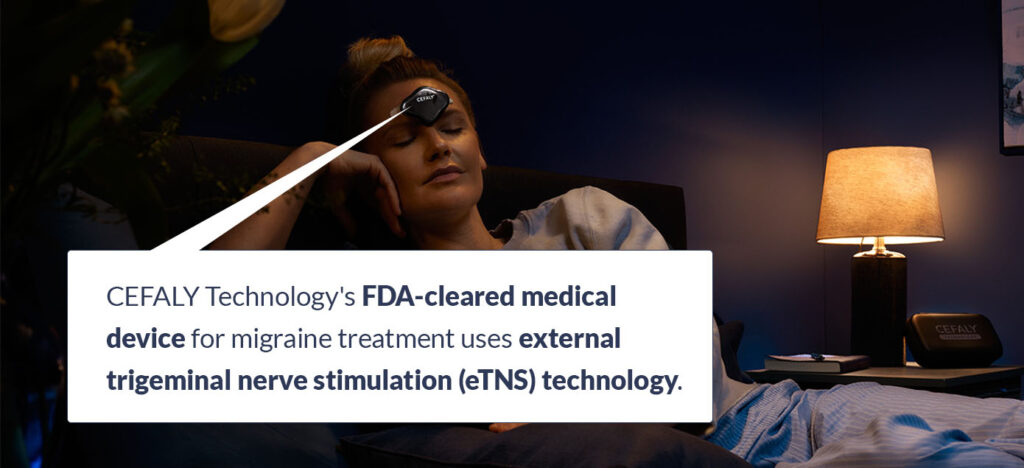
Other, specialized devices use a similar type of therapy without the need for physical therapists. CEFALY Technology’s FDA-cleared medical device for migraine treatment uses external trigeminal nerve stimulation (eTNS) technology. Simply connect the device to an adhesive electrode on your forehead, and it sends precise electrical impulses to the trigeminal nerve to soothe and prevent migraine pain.
Massage therapy
Massages are another major part of physical therapy. Various types can manage migraine intensity and frequency. Depending on the type, physiotherapists will typically apply gentle pressure and massage certain areas of the body, like the head, neck, shoulders or back, to address any migraine-related tension.
Stretching and exercising
Lastly, physical therapists may also guide you through controlled movements to strengthen muscles and improve your flexibility. Certain exercises, like walking, swimming and yoga, help with both. Such exercises help with migraine in several ways, from relieving stress and helping you sleep better to reducing pain levels. There are also specific stretches for migraine relief, thanks to the released tension.
Integrating physical therapy into migraine management plans
You can make the most of your current migraine management plan and integrate physical therapy into it. While physiotherapy targets muscle tension, posture and circulation, it may not directly address the neurological migraine triggers, which could include hormones and food sensitivities.
The best option is a comprehensive approach that is unique to your migraine needs. Speak with your healthcare professional to set up a migraine treatment plan that includes physical therapy. Your treatment plan can consist of prescription or over-the-counter (OTC) medicine, lifestyle changes, stress management and medical devices such as CEFALY.
Try CEFALY for migraine relief today!
Migraine is a complex condition that often needs a multifaceted treatment approach. One drug-free treatment option is CEFALY, which is clinically proven to reduce migraine intensity and frequency through neurostimulation. CEFALY can be used safely alongside other treatments, and it has no serious adverse side effects.
Try CEFALY Connected today — risk-free for 90 days!










Derniers messages

Le guide essentiel des dispositifs médicaux pour les migraines
CEFALY is an FDA-cleared medical device that targets the main pathway for migraine pain: the trigeminal nerve (the…

Best At-Home Migraine Neuromodulation Devices for 2026
Migraine affects more than 1 billion people worldwide. For people who want a drug-free option that can be…

Best FDA-Cleared Migraine Devices for Adults in 2026
Migraine affects an estimated 40 million people in the United States, and medication is not the right fit…