



Qu’est-ce qu’un cocktail contre la migraine?
Un cocktail contre la migraine est un mélange de médicaments destinés à soulager les symptômes de la migraine. The term "cocktail" elicits mixed emotions from people, considering its associations with alcohol. In this case, it just signifies a combination of ingredients - so some may prefer to say "combination medication for migraine." You can create a migraine cocktail at home by purchasing medications over-the-counter (OTC) or receive a stronger, hospital-administered version.
A migraine cocktail is not a migraine cure. It's only meant to alleviate the pain and other symptoms. That said, there are potential side effects to watch out for. Read through this article to understand what a migraine cocktail is and its overall effect on your health.
What is in a migraine cocktail?
The medications included in a migraine cocktail vary depending on whether you’ve purchased it from a pharmacy or if it’s administered by a hospital.
OTC migraine cocktail
The OTC migraine cocktail from the pharmacy — usually in pill form — typically includes:
- Acetaminophen: Acetaminophen works on the central nervous system to relieve pain (but not inflammation).
- Aspirin: Aspirin is responsible for reducing pain and inflammation in your body.
- Caffeine: When blood vessels swell, the resulting increase in blood flow can cause headache pain. Caffeine narrows these blood vessels, potentially alleviating the pain. That said, some studies suggest that caffeine can trigger a migraine attack for certain people rather than preventing one.
Although you can purchase these medications from the store, it’s better to consult with your doctor first for the safest and most effective medication to manage your migraine attacks.
Hospital-administered migraine cocktail
In some cases, severe migraine attacks may prompt you to seek help at a hospital. Your healthcare team will assess your symptoms and identify the best combination of medications to address your discomfort. These may include oral or intravenous (IV) drugs like:
- Analgesics: Non-steroidal anti-inflammatory drugs (NSAIDs) and acetaminophen are the analgesics usually prescribed for migraine attacks. Most of them, like aspirin and ibuprofen, can be taken orally. However, ketorolac can be injected or infused.
- Antiemetics: Your doctor may prescribe antiemetics if your migraine comes with nausea or vomiting. These are often partnered with NSAIDs or triptans. If you’re prescribed metoclopramide, this can be taken orally or via IV.
- Triptans: Triptan is also a first-line treatment for migraine, which can stop the attack as it’s happening. You’ll quickly identify these medicines as their names end in “triptan,” such as sumatriptan, eletriptan and naratriptan. These can be administered orally and by IV.
- Calcium channel blockers: Verapamil is a popular calcium channel blocker used to treat migraine attacks, and is available in an oral formulation, divided into three doses.
- Dihydroergotamine: While triptans have shown greater efficacy, doctors may prescribe this migraine drug if other options have proven ineffective.
- Beta-blockers: Your doctor may prescribe beta-blockers to prevent future migraine attacks. Similar to other medications, beta-blockers are usually taken orally. Examples include propranolol, timolol and bisoprolol.
- Antiepileptics: Antiepileptics, like valproate and topiramate, can help prevent a migraine attack and are taken orally.
Some migraine treatments have contraindications, meaning they can't be used with certain health conditions. For instance, you can't take eletriptan if you have heart failure, renal failure or arrhythmias. Be sure to tell your provider about all your health conditions when you're asked about your medical history.




When should you go to the ER for a migraine attack?
If your normal migraine medications and treatments don’t alleviate the pain and your migraine attack has lasted for three or more days, or your symptoms have suddenly worsened, it may be time to go to the ER.
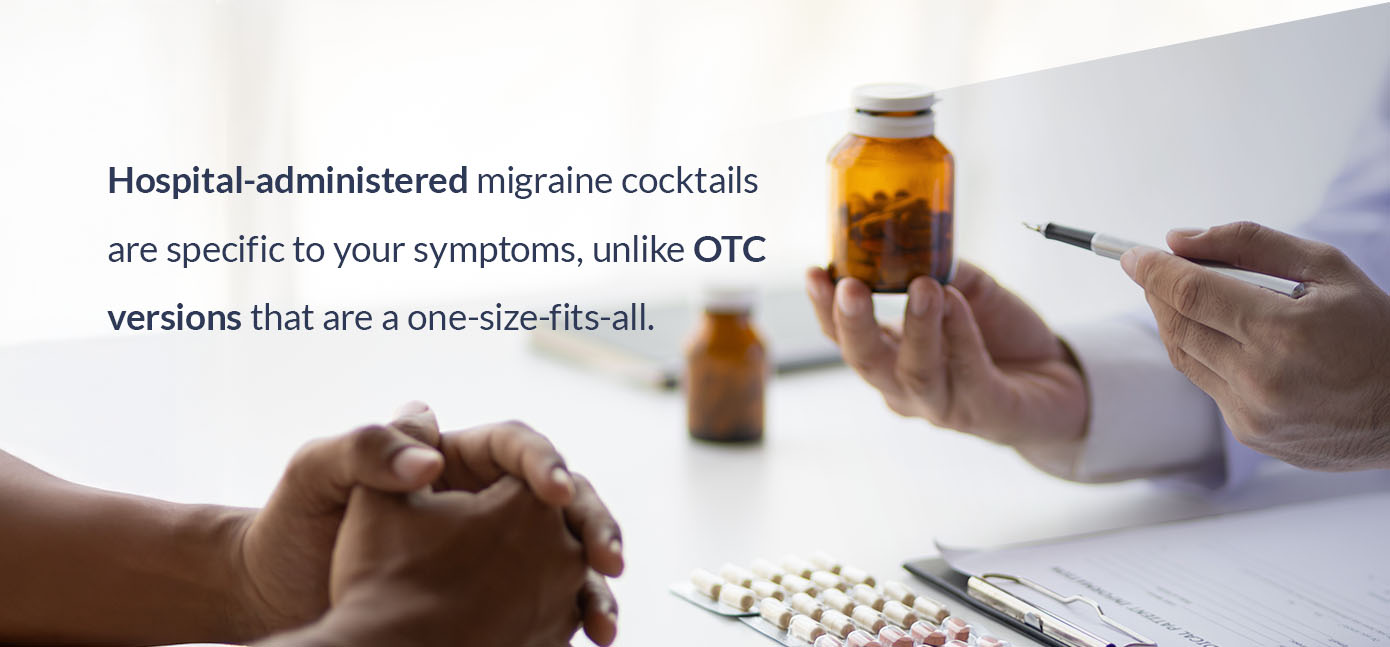
Hospital-administered migraine cocktails are specific to your symptoms, unlike OTC versions that are a one-size-fits-all. During a hospital visit, a doctor or nurse may be the one to administer your medications, and you will likely receive IV fluids to aid in hydration and electrolyte balance. Your doctors may also prescribe backup treatments you can take at home.
Are there side effects to a migraine cocktail?
Just like any other medication, migraine cocktails can have adverse side effects. Some medications are strictly prohibited for persons with specific health conditions, as the risks outweigh the potential benefits. Your doctor should be able to help you understand the risks. However, you may need to be especially cautious if:
- You previously had an allergic reaction to certain medications
- You are currently taking other medications
- You are pregnant or breastfeeding
Here are some of the most common side effects for each medication:
- NSAIDs: NSAIDs can cause gastrointestinal symptoms or those related to your digestive system. The most common side effects include abdominal burning, dyspepsia and diarrhea.
- Acetaminophen: Taking the medicine in higher doses or for longer periods can lead to liver or kidney damage. Other possible side effects include red, peeling or blistering skin; an allergic reaction; headache, nausea, trouble sleeping, or an upset stomach.
- Antiemetics: Adverse effects of antiemetics include serious heart rhythm abnormalities and movement disorders. Less common side effects include allergic reactions that can be life-threatening.
- Triptans: Triptans’ common serious side effects include muscle pain, fatigue and limb heaviness. Less common side effects include dizziness, lack of energy and difficulty concentrating.
- Dihydroergotamine: The most common reactions to dihydroergotamine are nausea and vomiting, which is why it is more commonly administered alongside antiemetics.
- Beta-blockers: Some adverse effects of beta-blockers include drowsiness, dizziness and fatigue. You may also experience nausea or vomiting, diarrhea or dry skin.
- Calcium channel blockers: With calcium channel blockers, you may experience constipation, dizziness, nausea or vomiting, drowsiness and hypotension.
- Antiepileptics: For antiepileptics, watch out for diarrhea, nausea or vomiting, dizziness, weight loss and fatigue.
- Antidepressants: Depending on the type of antidepressant, you may experience dry mouth, blurry vision, excessive sweating and constipation.
There are many other adverse and less common side effects for each of these medications. It's best to consult your doctor to identify your safest and most effective options and avoid drug interactions.
Try CEFALY as the drug-free alternative
Although migraine cocktails are generally safe if you take them as directed, you might also be seeking alternative options for migraine symptom relief. Try CEFALY, a wearable device for the prevention and treatment of migraine attacks.
Based on more than 20 years of research, CEFALY is clinically proven and FDA-cleared. In one study, 56.4% of users experienced relief from their most bothersome symptoms; in another study, 79% of users reported acute pain relief after two hours of use.
Experience CEFALY for yourself today — you can try it risk-free thanks to our 90-day money-back guarantee.

Related Posts:




Derniers messages

Le guide essentiel des dispositifs médicaux pour les migraines
CEFALY is an FDA-cleared medical device that targets the main pathway for migraine pain: the trigeminal nerve (the…

Best At-Home Migraine Neuromodulation Devices for 2026
Migraine affects more than 1 billion people worldwide. For people who want a drug-free option that can be…

Best FDA-Cleared Migraine Devices for Adults in 2026
Migraine affects an estimated 40 million people in the United States, and medication is not the right fit…