



Les dernières avancées dans le traitement de la migraine chronique
With about 3.1 billion people living with migraine globally, it’s vital to find new migraine treatments that are safer and more effective. La migraine est une affection invalidante qui peut perturber votre vie quotidienne – heureusement, il existe plusieurs méthodes pour la gérer. Some people quickly find treatment options that work for them, whereas others may struggle to find their perfect migraine management method.
Researchers are actively seeking better ways to manage this condition. If you're curious about the latest advances in chronic migraine treatment, continue reading.
Current migraine treatments
The majority of existing migraine treatments fall under two medication types — acute and preventive.
Acute medications
Acute, or abortive, migraine medications are meant to be taken at the onset of an attack. Acute migraine medication aims to alleviate pain-related symptoms, acting as a first line of action.
Current acute migraine drugs include:
- OTC analgesics: Over-the-counter pain relievers include aspirin, ibuprofen and acetaminophen. These drugs are easily accessible.
- Prescription NSAIDs: Those who need stronger relief can opt for nonsteroidal anti-inflammatory drugs. These include celecoxib, diclofenac potassium and indomethacin.
- Triptans: Triptans are a class of medications designed to target serotonin levels to help treat migraine and cluster headaches. Examples include almotriptan, eletriptan, sumatriptan and rizatriptan.
- Ergot alkaloids: Ergots include dihydroergotamine and ergotamine. They narrow the brain’s blood vessels to potentially block pain signals.
- Antiemetics: These are anti-nausea drugs like metoclopramide and ondansetron. Antiemetics help treat nausea and vomiting related to migraine attacks.
Preventive medications
Preventive migraine medications are meant for those who experience migraine attacks frequently. This would include having a migraine at least once per week. Preventive medications could also be an option if your attacks are particularly more severe. They aim to reduce migraine frequency and severity.
Current preventive migraine drugs include:
- Anti-hypertensives: Drugs used to treat high blood pressure can also help prevent migraine. Beta-blockers like propranolol and calcium channel blockers like verapamil fall under this category.
- Anti-seizure medications: Certain anti-seizure medications, such as topiramate and valproate, are used for migraine management. They work by modulating brain activity, which can reduce migraine frequency and severity.
- Antidepressants: Certain antidepressant classes can help with migraine. Typical examples include tricyclic antidepressants (TCAs), like amitriptyline, or serotonin-norepinephrine reuptake inhibitors (SNRIs), like venlafaxine.
- CGRP inhibitors: Common calcitonin gene-related peptide inhibitors used for migraine management include monoclonal antibodies (mAbs). They prevent the CGRP from binding to and activating the CGRP receptor.
- Botulinum toxin type A: Better known as Botox®, getting an injection can help with migraine prevention. Botox blocks a neurotransmitter linked to the trigeminal nerve — a primary pathway for migraine pain.
Additionally, certain supplements can help manage migraine pain, severity and frequency. These include magnesium, feverfew and coenzyme Q10. Whether you use medications or supplements of any kind, always consult with your healthcare practitioner beforehand.




Newest migraine treatments
Although there is no known cure for migraine, there is good news. As of 2025, more advances have been made in migraine treatment in two years than in the last 30 years. New migraine treatments involve different drugs and delivery systems that could work better than previous methods.
1. CGRP antagonists
Although both help with migraine management, CGRP antagonists slightly differ from CGRP inhibitors. CGRP inhibitors can either block the CGRP protein or prevent it from binding and activating its receptors, which helps prevent migraine. Conversely, CGRP antagonists directly block the CGRP receptors, which can help treat and prevent migraine.
CGRP antagonists for migraine prevention include injectables and oral drugs. For example, erenumab injections reduce monthly migraine days (MMDs). Eptinezumab-jjmr, fremanezumab and galcanezumab-gnlm are other injectable options.
Oral CGRP antagonist medications involve the following gepants for migraine treatment and prevention:
- Atogepant
- Rimegepant
- Ubrogepant
- Zavegepant
2. Lasmiditan
For those who are specifically triptan-insufficient responders, lasmiditan can be an option. Lasmiditan, or REYVOWTM, is a serotonin 5-HT1F receptor agonist that can help individuals who experience migraine with and without aura. REYVOW is an acute medication option to stop migraine-specific pain and migraine-related symptoms.
3. Neuromodulation devices
Neuromodulation, or nerve stimulation, is a clinically proven treatment for migraine. These non-invasive, wearable devices target specific nerves to alter the nervous system's activity, treating and/or preventing migraine attacks.
There are various migraine medical devices on the market. Not all neuromodulation devices are the same — ensure you find one that is supported by comprehensive clinical studies and is FDA-cleared.
How CEFALY has evolved over the years
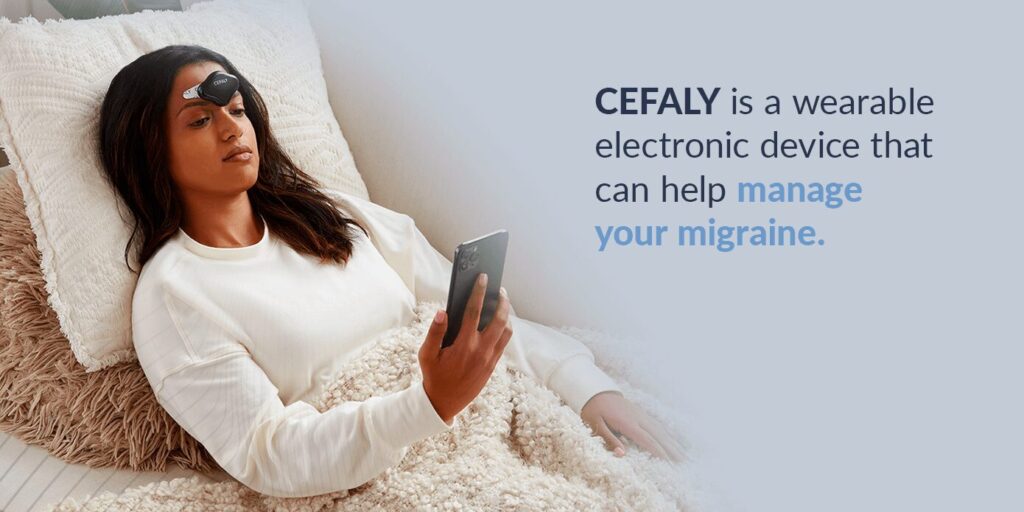
CEFALY is a wearable electronic device that can help manage migraine. Our technology aims to help solve the persistent problem of migraine pain through advanced therapeutic innovations.
The CEFALY device sends tiny electrical impulses through an electrode worn on the forehead to stimulate and desensitize the trigeminal nerve. Our clinical studies have shown that users experienced reduced migraine frequency, as well as relief of migraine pain and other symptoms.
Since the 2000s, we've refined our technology and neuromodulation devices to provide as much relief as possible. Each improvement builds upon the previous model. Here's how we evolved:
- 2004: CEFALY Technology was founded in Belgium.
- 2008: Our first CEFALY device was introduced, featuring a headband design.
- 2014: CEFALY received FDA clearance for its migraine prevention device. We also opened our U.S. office in Darien, Connecticut.
- 2016: CEFALY PREVENT was launched in the U.S.
- 2018: The CEFALY DUAL device was introduced: a dual-purpose migraine treatment device with two treatment modes — ACUTE and PREVENT.
- 2020: CEFALY was approved for over-the-counter purchasing.
- 2021: CEFALY Enhanced was introduced, featuring a new intuitive design, wireless charging and a longer battery life.
- 2022: CEFALY Connected was introduced. Its Bluetooth compatibility allows you to sync your device with the CeCe Migraine Management app to gain new insights into your migraine management journey. We also introduced the CEFALY Coach program.
- 2024: CEFALY marked 20 years of migraine treatment innovation.
Revivez grâce CEFALY
Whichever new migraine treatment you choose, ensure you consult with your healthcare provider first to select one that works best for you. If you're curious about an effective, OTC, drug-free migraine solution, try CEFALY.
Our ever-evolving technology is FDA-cleared and backed by clinical studies to give you peace of mind. Try CEFALY Connected today, and you could experience life with fewer migraine days.







Derniers messages

Le guide essentiel des dispositifs médicaux pour les migraines
CEFALY is an FDA-cleared medical device that targets the main pathway for migraine pain: the trigeminal nerve (the…

Best At-Home Migraine Neuromodulation Devices for 2026
Migraine affects more than 1 billion people worldwide. For people who want a drug-free option that can be…

Best FDA-Cleared Migraine Devices for Adults in 2026
Migraine affects an estimated 40 million people in the United States, and medication is not the right fit…